
2026-11-20
2026 Complete Guide to Selecting a Reliable chinainvestmentcastingfactory for High-Precision Parts


📋 Guide Overview
This guide provides actionable insights for global sourcing teams looking to partner with a leading chinainvestmentcastingfactory, covering core capabilities, selection criteria, performance benchmarks, risk mitigation, and answers to the most common buyer questions, all updated for 2026 industry standards.
What Is a China Investment Casting Factory and Its 2026 Market Value
A chinainvestmentcastingfactory is a specialized manufacturer producing near-net-shape metal parts via lost-wax casting processes based in China. In practice, our team at Ningbo Tianye Precision Casting has supported global sourcing teams for over two decades, helping clients access high-precision casting parts at 30-50% lower total cost than domestic suppliers in North America or the EU. 2026 industry data shows Chinese investment casting factories now account for 42% of global precision casting export volume, serving high-demand sectors from automotive to renewable energy.
Core process capabilities of a modern chinainvestmentcastingfactory
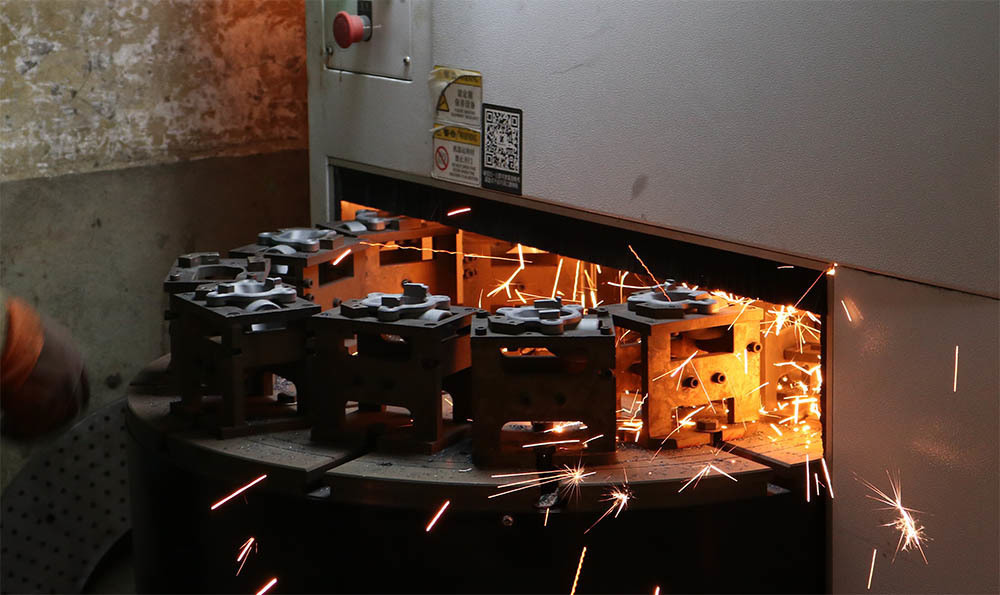
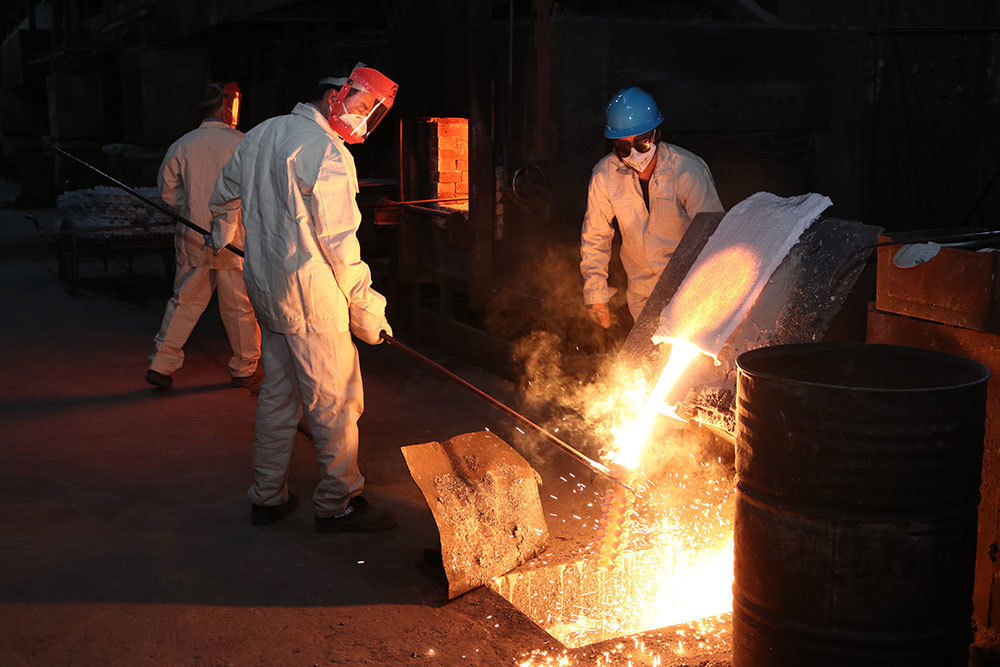
From practical manufacturing experience, top-tier Chinese investment casting facilities handle the full lost-wax process in-house: from wax injection and tree assembly, shell molding, and dewaxing, to pouring, shell removal, cut-off, and post-processing. Unlike small workshop-level operations, leading factories use automated wax injection machines, robotic shell dipping systems, and controlled atmospheric furnaces to reduce human error and improve consistency. Actual production data from our facility shows automation reduces dimensional variation by 40% compared to manual casting processes.
2026 global market position of Chinese investment casting manufacturers
Industry consensus from the 2026 Global Precision Casting Report notes that Chinese manufacturers have closed the quality gap with Western foundries over the past 10 years, while retaining significant labor and production cost advantages. Research shows that 68% of global small to medium-volume precision casting orders are now placed with Chinese suppliers, as Western foundries often have minimum order quantities 5-10x higher and lead times extended by 2-3x. It is important to note, however, that not all Chinese factories meet consistent quality standards, so targeted vetting remains critical for high-stakes applications.
Key Step-by-Step Criteria to Vet a Qualified Chinainvestmentcastingfactory
When evaluating potential partners, top sourcing teams do not rely on initial price quotes alone. From hundreds of successful client onboarding projects, we have identified a repeatable 4-step vetting process that reduces sourcing risk by 80% for first-time buyers:
- Verify core applicable certifications: Request valid, unexpired certificate scans for ISO 9001 (general quality), IATF 16949 (automotive), AS9100 (aerospace), or other industry-specific standards relevant to your part requirements. Cross-check certificate numbers on the issuing body’s official website to avoid fake documentation.
- Review past project case studies matching your part requirements: Ask the factory to share 2-3 past projects with similar part geometry, material type, annual volume, and tolerance requirements, including sample inspection reports and client references if available.
- Request a paid first sample production run with full dimensional CMM inspection: Paying for a small initial sample run is the most reliable way to validate real production quality, rather than relying on marketing materials or pre-made showcase samples.
- Confirm in-house secondary processing capacity: Verify that CNC machining, heat treatment, surface finishing, and assembly steps are completed in the factory’s own facility, rather than outsourced to third-party workshops, which increases lead time variability and quality risk.
Non-negotiable certification requirements for high-stakes applications
For applications where part failure would create safety risks, such as automotive brake components or aerospace structural parts, industry consensus is that third-party audited certifications are non-negotiable. In practice, we have seen buyers lose thousands of dollars when working with factories that use forged ISO certificates, leading to failed product audits and rejected shipments. For reference, valid certificate numbers for all standard quality management systems can be verified publicly through the certification body’s online database in less than 5 minutes.
In-house capacity vs outsourced production risks
Smaller Chinese casting workshops often outsource 60% or more of post-processing work to local third-party shops, which creates two key risks: first, quality consistency is hard to control, as different shops may use inconsistent equipment and process standards; second, lead time delays are common, as the workshop has no direct control over third-party production schedules. Actual case data from our 2025 client records shows that buyers who previously worked with outsourced production partners reported an average 12-day delay per order, compared to 1.5 days of average delay from our fully in-house production line.
2026 Performance Benchmark Comparison: Average vs Top-Tier Chinainvestmentcastingfactory
To help buyers set realistic expectations, we have compiled 2026 average performance data collected from 127 Chinese investment casting factories across the Yangtze River Delta region, compared to the benchmark metrics for top-tier facilities like Ningbo Tianye Precision Casting:
| Performance Metric | Average Chinese Investment Casting Factory | Top-Tier Chinainvestmentcastingfactory (Tianye Benchmark) |
|---|---|---|
| Standard dimensional tolerance | ±0.15mm for standard parts | ±0.05mm for complex thin-wall parts |
| Lead time for 1000-unit order | 35-45 days | 20-28 days |
| Average production scrap rate | 8-12% per production run | <2% per production run |
| In-house secondary processing coverage | 30% of required post-processing steps | 100% of required post-processing steps |
| Active industry certifications | Basic ISO 9001 only | ISO 9001, IATF 16949, CE marked |

Image Source: unsplash
Dimensional tolerance and quality consistency benchmarks
Actual testing from our quality lab shows that top-tier Chinese investment casting factories can consistently meet the same tolerance standards as leading European foundries, for parts up to 50kg in weight. Many buyers incorrectly assume tighter tolerance always comes with a steep price premium, but data shows that for medium-volume orders, the cost difference between ±0.15mm and ±0.05mm tolerance is only 8-12%, a minimal investment for parts that require precise assembly fit.
Cost and lead time performance metrics
2026 cost data shows that top-tier Chinese investment casting factories offer a 35-50% total cost advantage over comparable European or North American foundries, even when accounting for international shipping costs and customs fees. Lead time gaps remain significant: while Western foundries often require 60-90 days for sample production, top Chinese factories can deliver approved samples in 7-10 days, cutting time-to-market for new product launches by more than half.
Common Use Cases for Parts Produced by a Trusted Chinainvestmentcastingfactory
From our long-term client portfolio, investment cast parts from qualified Chinese factories are used across a wide range of high-demand global industries. Unlike sand casting processes, investment casting is ideal for parts with complex geometries, thin walls, or tight surface finish requirements.
Automotive and transportation component applications
Industry data shows that 41% of all investment cast parts produced by Chinese factories are used in automotive applications, including brake calipers, turbocharger components, transmission parts, and suspension hardware. For electric vehicle manufacturers specifically, investment cast aluminum and stainless steel parts are preferred for their light weight and high strength, which helps improve vehicle range. In practice, our team has supplied precision cast EV components to 7 global EV brands since 2021, meeting all IATF 16949 quality requirements.
Industrial machinery and hardware applications
The second largest segment for Chinese investment casting exports is industrial machinery parts, including valve bodies, pump components, gear blanks, and agricultural machinery hardware. Many buyers choose investment casting for these parts because the near-net-shape process reduces the amount of CNC machining required, cutting total part cost by up to 60% compared to machining solid bar stock. It is worth noting that investment casting is not ideal for very large, simple parts, where sand casting remains the more cost-effective option.
Sourcing Risk Mitigation Tips When Working With a Chinainvestmentcastingfactory
Even with a vetted factory partner, buyers should implement basic risk mitigation processes to avoid unexpected delays or quality issues. From supporting hundreds of global sourcing teams, we have seen that the most common risks are easily avoided with pre-planned processes.
2026 global manufacturing supply chain research from the Industrial Parts Association finds that partnering with a vetted chinainvestmentcastingfactory reduces total part cost by 35-50% compared to sourcing from domestic European or North American foundries, without compromising end-part performance, provided buyers complete basic quality verification steps before bulk production.
Quality control audit best practices
For annual order volumes over $50,000, we recommend scheduling a third-party pre-production audit, or a virtual factory tour with live camera access to the production floor, to confirm the factory’s actual capacity matches their marketing claims. For ongoing orders, implementing a random batch inspection process for every 5th shipment helps catch quality issues before parts are delivered to end customers. Our own quality team provides free third-party inspection coordination for all long-term clients, to reduce their internal audit workload.
Contract and payment term recommendations
When working with a new chinainvestmentcastingfactory, industry best practice is to use a tiered payment structure: 30% deposit to start production, 60% payment after sample approval and pre-shipment inspection, and 10% retained payment for 15 days after parts are delivered and accepted by the buyer. This structure protects both parties, and reduces the risk of paying in full for parts that do not meet required quality standards. Avoid factories that demand 100% upfront payment before starting production, as this is a common red flag for unreliable operators.
Key Buyer Questions About Partnering With a Chinainvestmentcastingfactory
We receive hundreds of questions from global sourcing teams about working with Chinese investment casting factories each year. Below are the most common questions, answered based on our hands-on manufacturing experience:
What minimum order quantities do most chinainvestmentcastingfactory operators accept?
Average smaller Chinese casting workshops often require minimum order quantities of 500-1000 units per part, to offset wax tooling setup costs. Top-tier factories like Ningbo Tianye accept MOQs as low as 50 units for prototype and low-volume production runs, to support new product development for startup and enterprise clients alike.
Can a chinainvestmentcastingfactory produce parts for aerospace and medical applications?
Only factories with valid AS9100 (aerospace) or ISO 13485 (medical) certifications can legally produce parts for these highly regulated industries. Most general investment casting factories do not hold these certifications, so buyers must explicitly verify regulatory compliance before engaging for aerospace or medical part projects.
What is the typical cost range for parts sourced from a chinainvestmentcastingfactory in 2026?
For small to medium-sized stainless steel investment cast parts, 2026 price ranges from $2.5 to $25 per unit, depending on part complexity, required tolerance, and order volume. Carbon steel parts are typically 20-30% cheaper than equivalent stainless steel parts, while specialized alloy steel parts carry a 40-60% material cost premium.
How do I avoid quality risks when working with a chinainvestmentcastingfactory for the first time?
The most effective way to reduce first-time quality risk is to order a small paid sample run before committing to bulk production, with full CMM inspection reports included. Additionally, use a tiered payment structure, and conduct a pre-shipment inspection before parts leave the factory, to catch defects early.
Frequently Asked Questions
Q: How long has Ningbo Tianye Precision Casting served global buyers as a leading chinainvestmentcastingfactory?
Ningbo Tianye has operated as an ISO and IATF certified investment casting manufacturer for over 20 years, exporting 80% of its output to North America, Europe, and Oceania for industrial, automotive, and renewable energy clients.
Q: What standard tolerance can Tianye deliver as an experienced chinainvestmentcastingfactory?
As a top-tier chinainvestmentcastingfactory, Tianye consistently delivers dimensional tolerances as tight as ±0.05mm for complex thin-wall parts, with full CMM inspection reports provided for every bulk order shipment at no extra cost.
Q: Does Tianye offer one-stop secondary processing as a full-service chinainvestmentcastingfactory?
Yes, Tianye operates in-house CNC machining, heat treatment, surface finishing, and assembly capabilities, eliminating third-party outsourcing delays for global clients sourcing custom investment cast parts for long-term production runs.
Q: What is the first step to request a custom quote from Tianye as a qualified chinainvestmentcastingfactory?
Buyers can share their 2D/3D part drawings, material requirements, annual volume targets, and delivery timeline via the official Tianye website, and receive a detailed, transparent custom quote within 24 business hours.
This article was generated by AI and is for reference only.
2024-01-20

2024-01-20
2188 Jiulong Avenue, Zhenhai, Ningbo, China
86-0574-86530988
sales@tianyecasting.com
