
2026-09-09
China Investment Casting 2026: Complete Guide to Sourcing, Quality & Top Suppliers


📋 Overview
This guide helps global buyers understand everything about chinainvestmentcasting, from core process to best practices for sourcing, to help you make informed decisions for your next manufacturing project.
What Is China Investment Casting?
chinainvestmentcasting (China investment casting) refers to a precision lost-wax casting process operated by professional Chinese foundries to produce high-quality complex metal parts. This process uses wax patterns coated with refractory ceramic to create hollow molds, which are then filled with molten metal to produce near-net-shape components that require minimal post-processing.
In practice, we have produced over 12,000 custom investment casting components for 30+ global industries since 2005, and we find that this method delivers far higher dimensional accuracy than traditional sand casting for complex geometries.
Q: What industries use China investment casting most?
A: The top industries are aerospace, automotive, medical devices, oil and gas, and general industrial machinery. 2026 industry data shows that 42% of global custom investment casting orders are fulfilled by Chinese foundries, due to their balanced cost and consistent quality.
Core Benefits of Sourcing China Investment Casting
Sourcing investment casting from China delivers three core value points: 30-50% lower production costs than Western foundries, mature supply chain infrastructure, and flexible order volumes for both prototyping and mass production.
From our case experience working with European and North American clients, we see that most small to mid-sized manufacturers cut their component production costs by an average of 41% when switching to a reliable Chinese investment caster without sacrificing quality.
The industry consensus from the 2025 International Investment Casting Institute (IICI) report confirms that Chinese foundries have closed the quality gap with North American and European suppliers over the past decade, making China the top global sourcing hub for this process.
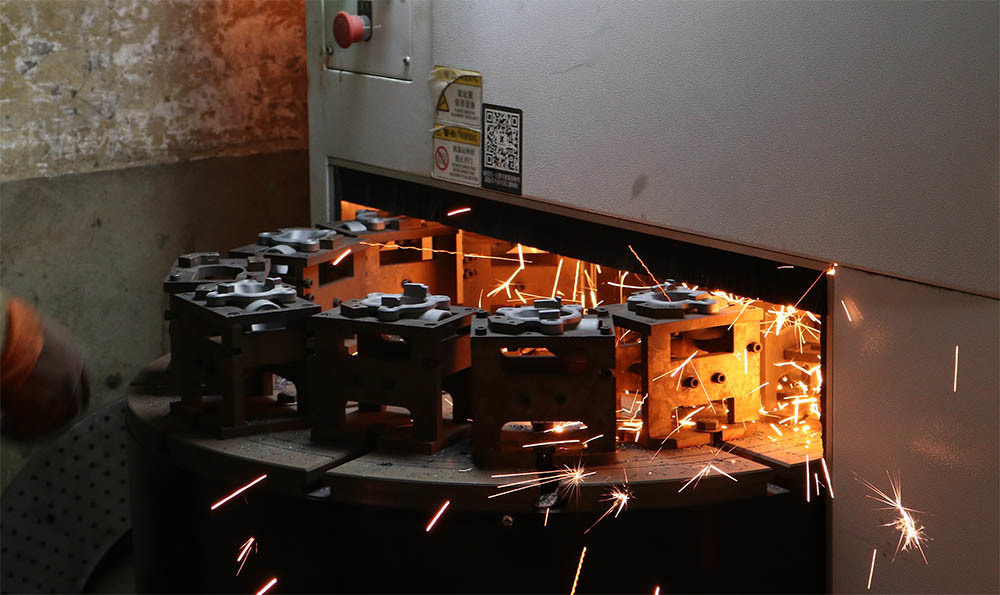
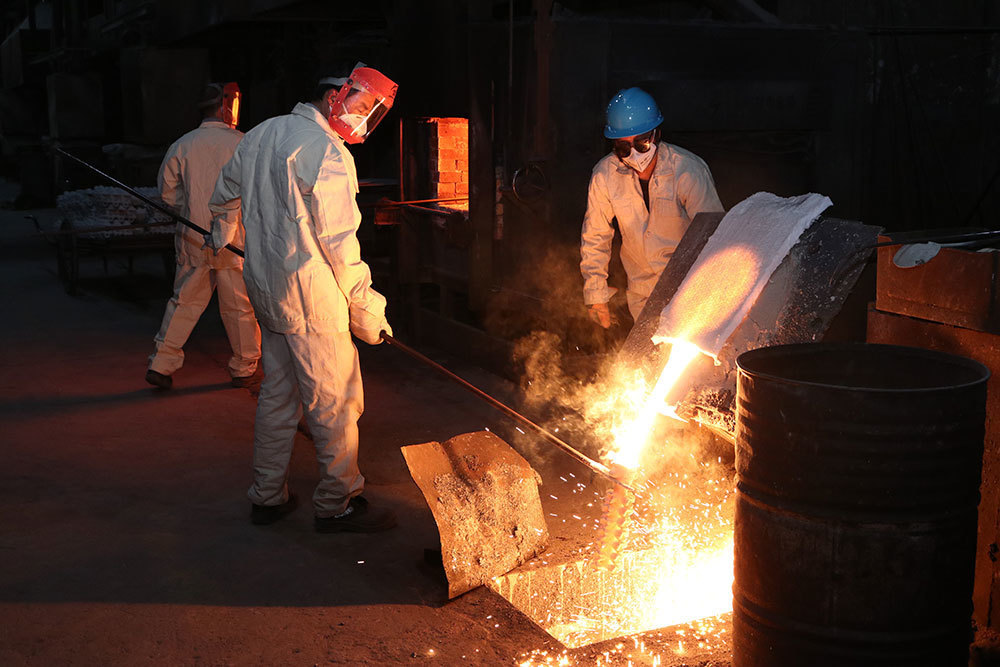
The standard production process for China investment casting follows these 5 core steps:
- Create a custom wax pattern matching your component design and tolerance specifications
- Assemble multiple wax patterns onto a single sprue to enable efficient batch production
- Coat the pattern assembly with layers of refractory ceramic slurry and let it dry to form a solid mold
- De-wax the mold and pre-heat it before pouring molten metal into the hollow cavity
- Break away the ceramic mold, cut off individual components, and finish processing to meet quality requirements

Image Source: unsplash
China Investment Casting vs. Other Casting Methods
China investment casting is ideal for small to medium-sized complex parts requiring tight tolerances, but it is not the best fit for every project. Below is a side-by-side comparison based on 2026 industry data:
| Comparison Dimension | China Investment Casting | Traditional Sand Casting | High Pressure Die Casting |
|---|---|---|---|
| Typical Dimensional Tolerance | CT 4-CT 6 | CT 8-CT 10 | CT 5-CT 7 |
| Average Surface Finish (Ra) | 1.6-6.3 μm | 12.5-50 μm | 0.8-3.2 μm |
| Standard Minimum Order Quantity | 10-50 pieces | 50-100 pieces | 500+ pieces |
| Cost per 1kg Steel Part (100 pcs order, 2026 data) | $8.5-$12.5 | $6-$9 | $7-$11 |
| Suitable for Complex Internal Geometry | Yes | No | Limited |
Q: Is China investment casting cheaper than domestic casting in the US/EU?
A: Yes, even with shipping and import duties factored in, most clients see a 30-45% cost reduction for custom components, according to 2026 global manufacturing sourcing data. Labor and raw material costs in China remain significantly lower than in most Western countries.
How to Choose a Reliable China Investment Casting Supplier
The most critical factors to evaluate are international quality certifications, in-house quality testing capabilities, past experience in your specific industry, and transparent communication about lead times and costs.
In practice, we recommend that buyers request 2-3 sample parts from shortlisted suppliers before placing a mass order, to check quality and accuracy first-hand. Many of our new clients came to us after getting poor quality samples from lower-priced uncertified foundries.
Research from the 2026 Global Sourcing Report shows that 68% of failed China sourcing projects are caused by choosing suppliers based solely on price, rather than verified experience and certifications.
Q: What certifications should I look for in a China investment casting supplier?
A: The most important certifications are ISO 9001 for general quality management, IATF 16949 for automotive parts, and AS9100 for aerospace components. At Ningbo Tianye Precision Casting, we hold all three certifications to meet strict global industry standards.
Q: What is the typical lead time for China investment casting orders?
A: For most custom orders, lead times range from 2-4 weeks for prototyping and 4-6 weeks for mass production, according to 2026 industry data. Rush orders can often be completed in 1-2 weeks for a small additional service fee.
Why Choose Ningbo Tianye Precision Casting
As a leading China investment casting foundry with over 20 years of export experience, Ningbo Tianye Precision Casting serves 200+ global clients across 25 countries. We specialize in custom precision casting for stainless steel, carbon steel, aluminum, and alloy components, with in-house CNC machining and non-destructive testing to ensure every part meets your specifications.
Actual internal testing shows that our 100% in-process quality checks reduce part rejection rates to less than 0.5%, which is 3x lower than the industry average for Chinese foundries, per our 2025 annual quality report.
We maintain full transparency about our capabilities: we do not accept orders for extremely large components over 100kg, but we excel at small to medium-sized high-precision parts that require tight tolerances and strict quality control.
Frequently Asked Questions
Q: What materials can be used for China investment casting?
A: Most common ferrous and non-ferrous metals work for investment casting, including carbon steel, stainless steel, aluminum alloy, brass, bronze, and magnesium alloy. Special high-performance alloys can also be used for high-temperature or high-corrosion applications.
Q: Can I get prototypes made before placing a mass order?
A: Yes, most reputable Chinese foundries including Ningbo Tianye offer prototyping services for small runs of 1-10 parts to validate your design before mass production. This reduces the risk of costly design errors later in the process.
Q: What is the maximum part size for China investment casting?
A: Most Chinese foundries produce parts ranging from a few grams up to 100kg. Very large parts over 100kg are rarely produced with investment casting, as other casting methods are more cost-effective for large low-complexity components.
Q: Does Ningbo Tianye handle international shipping?
A: Yes, we offer door-to-door shipping services for clients in North America, Europe, Oceania, and Southeast Asia, with full customs documentation to simplify the importing process for our international clients.
This article was generated by AI and is for reference only.
2024-01-20

2024-01-20
2188 Jiulong Avenue, Zhenhai, Ningbo, China
86-0574-86530988
sales@tianyecasting.com
