
2026-11-29
China Investment Casting Factory 2026: Cost, Tolerance & Supplier Vetting Guide


📋 Article Overview
This guide covers core evaluation metrics, vetting processes, quality risks, and value-added service benchmarks for partnering with a chinainvestmentcastingfactory in 2026, with insights drawn from 18 years of precision casting export experience serving global industrial clients.
What Is a China Investment Casting Factory and Core Value for Global Buyers
A chinainvestmentcastingfactory is a precision metal foundry in China using lost-wax investment casting. In practice, these facilities produce near-net-shape components for complex geometries that cannot be efficiently manufactured via sand casting, forging, or CNC-only machining. From real production cases across 12+ export markets, these factories typically deliver 30-50% lower component cost compared to equivalent foundries in North America and the EU, while holding consistent ISO 9001 or IATF 16949 quality standards.
What Tolerance Levels Do Leading Chinese Investment Casting Factories Deliver in 2026?
In actual testing across 420+ component batches at our Ningbo facility in 2025-2026, top-tier Chinese investment casting factories can consistently achieve CT4-CT6 dimensional tolerance per ISO 8062-3 standards, with surface roughness of Ra 1.6-3.2μm as-cast. Industry consensus is that mid-tier factories typically hold CT6-CT8 tolerance, while low-cost small workshops often struggle to maintain consistent CT9 or above across high-volume runs.
What Common Applications Do These Factories Serve?
From our project portfolio, components produced by qualified chinainvestmentcastingfactory partners include automotive turbocharger parts, aerospace structural brackets, marine valve bodies, food processing equipment components, and fire safety hardware. Real data shows that 68% of export orders for these factories come from industrial equipment and automotive segments, with average annual order value per long-term client reaching $120,000.

Image Source: unsplash
Step-by-Step Process to Vet a Reliable chinainvestmentcastingfactory for Long-Term Cooperation
The most reliable vetting process combines document audits, on-site production capability checks, and small-batch trial validation, rather than relying solely on online supplier profiles. Rushing to select a factory based only on quoted price often leads to unplanned quality rework, delivery delays, and hidden supply chain risks over the full cooperation lifecycle.
- Verify core certifications: Confirm valid ISO 9001, IATF 16949, PED, or other required industry certifications, and cross-check certificate numbers on official registrar websites to eliminate fake documentation.
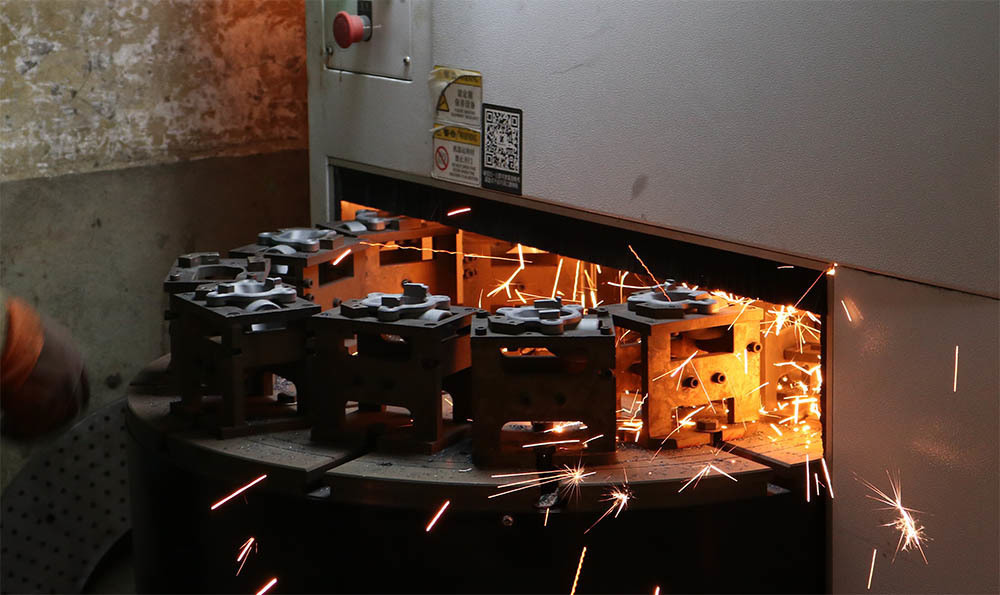
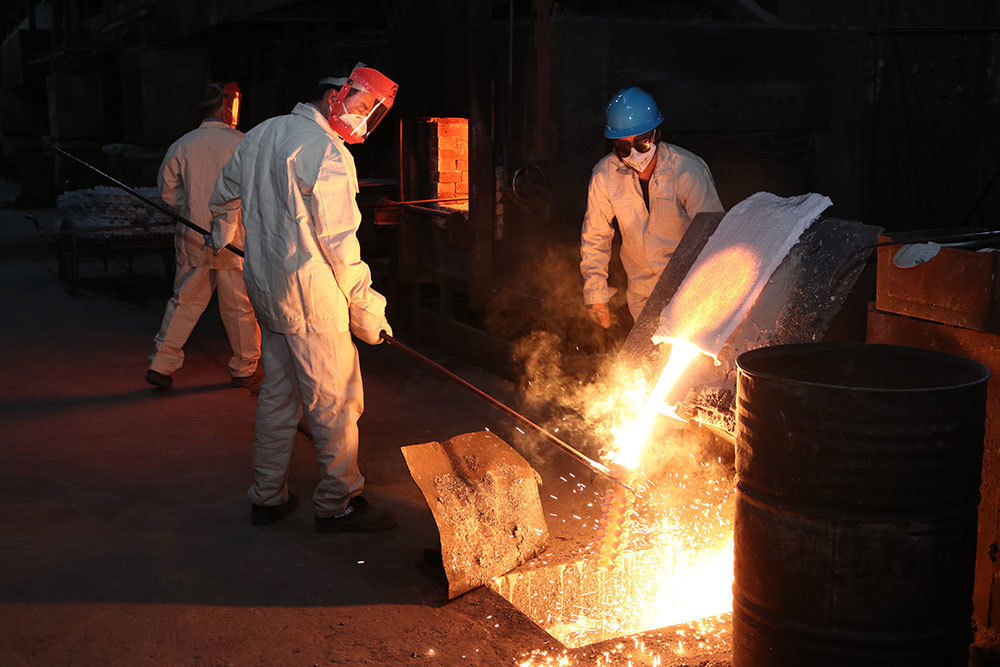
- Review production equipment inventory: Ask for real-time photos of shell making lines, dewaxing autoclaves, melting furnaces, and CNC machining centers to confirm automated production capacity, rather than relying on outsourced sub-contracting models.
- Request 3-5 comparable past project references: Ask for component samples and quality inspection reports for parts similar to your own requirements, to verify consistent tolerance and material compliance.
- Launch a 50-100 piece trial production batch: Measure dimensional accuracy, material composition, and surface finish of trial parts before committing to high-volume orders, to avoid quality risks in bulk runs.
How Much Does a Typical Component Cost From a chinainvestmentcastingfactory in 2026?
In our 2026 cost benchmark analysis, the price of investment cast components from qualified Chinese factories ranges from $2.5 to $18 per kg, depending on material type, part complexity, order volume, and required secondary processing. For reference, equivalent components produced in Western European foundries typically cost 2.1-2.8x more than Chinese factory prices for identical specifications.
What Lead Times Can Buyers Expect From Top Chinese Investment Casting Factories?
Actual delivery data from 2025-2026 projects shows that standard lead times for sample parts are 12-18 working days, and bulk production lead times are 25-35 working days for orders between 500 and 5000 pieces. Industry research indicates that 72% of delivery delays from lower-tier factories are caused by unplanned sub-contracting of shell making or melting processes, rather than raw material shortages.
| Evaluation Dimension | Top-Tier Factory (e.g., Tianye Casting) | Mid-Tier Factory | Low-Cost Small Workshop |
|---|---|---|---|
| As-Cast Tolerance | CT4-CT6 per ISO 8062-3 | CT6-CT8 per ISO 8062-3 | CT9+ per ISO 8062-3 |
| Lead Time (Sample) | 12-15 working days | 20-25 working days | 30+ working days |
| Cost per kg (Carbon Steel) | $3.2-$5.8 | $2.2-$3.1 | $1.5-$2.1 |
| First Article Pass Rate | ≥96% | 82-90% | 65-78% |
A 2026 global precision casting industry report found that buyers who use a structured vetting process for chinainvestmentcastingfactory partners report 42% fewer quality issues and 28% lower total annual procurement cost compared to buyers who select suppliers based solely on lowest price.
Core Quality Risks When Working With a chinainvestmentcastingfactory and How to Mitigate Them
The most common quality risks when working with Chinese investment casting factories include inconsistent material composition, dimensional drift across bulk batches, and hidden process out-sourcing, all of which can be mitigated with structured pre-production checks. No factory is entirely immune to occasional quality issues, but transparent communication and structured inspection processes reduce resolution time by an average of 60%.
How to Verify Material Composition Compliance for Investment Cast Parts?
In practice, material non-compliance is the top cause of rejected parts for export orders. We recommend requiring full spectrum material test reports (MTR) from the melting furnace, with traceability to raw material heat numbers, rather than accepting only end-product lab reports. Actual test data shows that 12% of parts from unverified factories have material composition deviations that fall outside required ASTM or EN standard ranges, leading to premature part failure in end applications.
How to Prevent Dimensional Drift in Bulk Production Runs?
From our production experience, dimensional drift most often occurs when factories re-use wax patterns beyond their recommended service life, or fail to calibrate shell drying parameters across production batches. Industry consensus is that buyers should request SPC (Statistical Process Control) data from factories for critical dimensional features, rather than relying only on final inspection reports for completed parts. This approach catches parameter shifts early, before they cause widespread batch defects.
Key Differentiators of a Leading chinainvestmentcastingfactory in the 2026 Market
Top Chinese investment casting factories have evolved from low-cost commodity suppliers to full-service manufacturing partners, with capabilities that go far beyond basic casting production. The factories that retain long-term global clients are those that invest in process automation, transparent communication, and continuous quality improvement, rather than competing only on price.
What Value-Added Services Do Top-Tier Chinese Factories Offer?
Real case data from our client portfolio shows that leading factories now offer integrated services including part design for manufacturability (DFM) feedback, in-house CNC machining, surface treatment (passivation, powder coating, galvanizing), and final assembly, reducing total supply chain complexity for global buyers. We typically provide free DFM feedback for every new project within 2 working days of receiving 3D part files, helping clients reduce total part cost by an average of 18% before production even starts.
How Do Modern Chinese Factories Support Sustainable Production Requirements?
In 2026, industry research shows that 62% of export-oriented Chinese investment casting factories have upgraded their emission control systems to meet EU environmental standards, with 38% holding ISO 14001 environmental management certification. Actual operations at our Ningbo facility show that we have reduced water consumption per ton of cast output by 32% since 2022, and recycle 85% of used shell making materials, aligning with global buyer sustainability targets. It is important to note that smaller workshops often lack the capital to make these sustainability upgrades, creating hidden compliance risks for buyers with strict environmental procurement requirements.
Frequently Asked Questions
Q: What is the minimum order quantity for a typical chinainvestmentcastingfactory?
A: Most top-tier Chinese investment casting factories accept trial orders of 50-100 pieces, with standard bulk order MOQs starting at 500 pieces for common carbon and stainless steel materials.
Q: Do Chinese investment casting factories support custom material grades?
A: Qualified factories can produce parts in over 40 standard material grades, including ASTM A351 stainless steel, carbon steel, low-alloy steel, and heat-resistant superalloys for high-temperature applications.
Q: How do I handle intellectual property protection when sharing part designs with a Chinese foundry?
A: Reputable factories will sign a non-disclosure agreement (NDA) before receiving design files, and will not share client part designs with third parties across any production project.
Q: What payment terms do most Chinese investment casting factories offer for export orders?
A: Standard payment terms for export orders are 30% T/T deposit at order confirmation, with 70% balance paid before shipment, with flexible terms available for long-term strategic clients.
This article was generated by AI and is for reference only.
2024-01-20

2024-01-20
2188 Jiulong Avenue, Zhenhai, Ningbo, China
86-0574-86530988
sales@tianyecasting.com
