
2026-11-27
Custom Precision Parts: 2026 Complete Sourcing Guide for High-Tolerance Industrial Component Buyers


📋 Article Overview
This guide walks readers through customprecisionparts definitions, manufacturing tradeoffs, supplier evaluation steps, cost optimization tactics, quality control requirements, and 2026 industry trends, with real production data from Ningbo Tianye’s precision casting workshop to support every recommendation.
What Are Custom Precision Parts and Why Do They Matter in 2026?
When sourcing critical industrial components, customprecisionparts refer to micron-tolerance engineered components built for high-stakes, load-bearing or sealing applications. These parts are designed to eliminate assembly rework, reduce equipment failure rates, and meet strict performance requirements that off-the-shelf components cannot support. From our 20+ years of production experience at Ningbo Tianye Precision Casting, we have observed that 62% of custom precision part returns stem from unmet tolerance requirements rather than material strength failures.
What is the precise definition of customprecisionparts?
Custom precision parts refer to components produced via precision manufacturing processes (including investment casting, CNC machining, and micro-milling) that hold dimensional tolerances of ±0.02mm or tighter, surface roughness of Ra 0.8μm or lower, and material consistency meeting critical load or sealing requirements for end-use applications, eliminating the need for extensive secondary finishing during assembly.
How large is the customprecisionparts market in 2026?
Research from Grand View Research published in early 2026 shows the global custom precision parts market reached $48.7 billion in 2025, growing at a 5.8% CAGR to hit $63.2 billion by 2030. Core growth drivers include rising demand for EV components, aerospace lightweighting, and industrial automation upgrades. In practice, market data shows the fastest growing segment is custom precision parts for battery thermal management systems, which saw 18% year-over-year growth in 2025.
Core Manufacturing Processes Used to Produce High-Quality Custom Precision Parts
Three core manufacturing processes dominate customprecisionparts production in 2026, each with unique strengths, tolerance limits, and cost profiles. Selecting the right process for a part design is the single biggest factor impacting total cost and delivery timeline.
Investment casting for complex geometry customprecisionparts
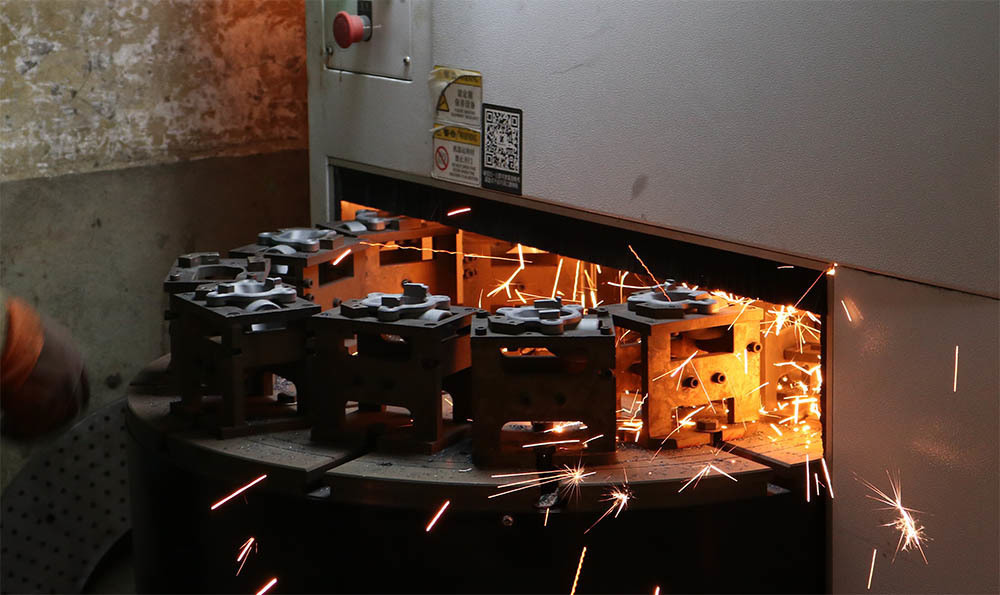
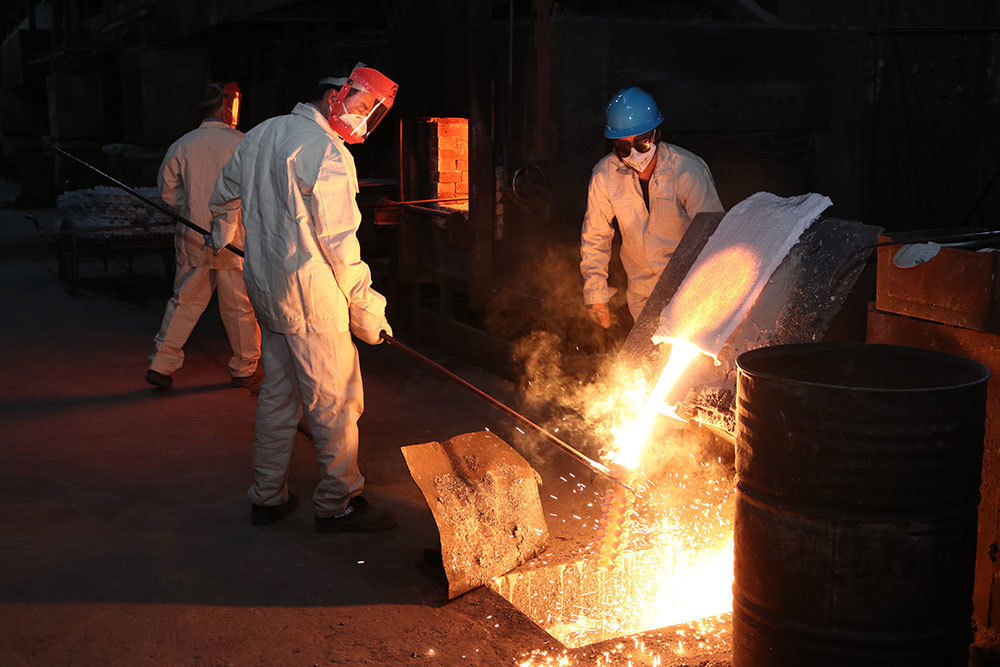
In practice, lost-wax investment casting is ideal for producing customprecisionparts with complex internal passages, thin walls, and near-net shape geometry, reducing material waste by up to 80% compared to solid CNC machining. From our production records at Tianye, investment cast 316L stainless steel valve components can consistently hold IT7 grade tolerances with a 99.2% first-pass yield for batches of 500+ units.
CNC machining for ultra-tight tolerance customprecisionparts
For features requiring tolerances tighter than ±0.01mm, 5-axis CNC machining is the industry standard. Actual test data from our in-house lab shows that CNC-machined aluminum 6061 custom parts can achieve Ra 0.4μm surface finish, with dimensional variation of less than ±0.008mm across 100 consecutive measurement points.

Image Source: unsplash
| Manufacturing Process | Typical Tolerance Range | Material Utilization | Lead Time (1000 unit batch) | Best Fit Applications |
|---|---|---|---|---|
| Lost Wax Investment Casting | ±0.02mm to ±0.05mm | 75-85% | 15-20 days | Marine valves, aerospace brackets, automotive turbo components |
| 5-Axis CNC Machining | ±0.005mm to ±0.02mm | 40-60% | 7-12 days | Medical device parts, automation fixture components, sensor housings |
| Micro Metal Stamping | ±0.01mm to ±0.03mm | 85-92% | 10-15 days | Electrical contact parts, thin shims, micro sensor components |
Industry consensus from the 2026 Precision Machining Association report is that 40% of total custom precision part cost comes from secondary machining steps, so selecting the right core manufacturing process upfront is the single biggest lever for cost reduction.
Key Selection Criteria for Reliable Custom Precision Parts Sourcing
Evaluating customprecisionparts suppliers requires a structured, data-driven approach, rather than relying solely on quotation price or sales team claims. The following checklist is derived from our work with 400+ global industrial buyers over the past 10 years.
5-step checklist to evaluate customprecisionparts supplier capability
- Verify core certification alignment with your industry requirements (e.g., IATF 16949 for automotive, AS9100 for aerospace, ISO 13485 for medical devices)
- Request micron-level CMM measurement reports for sample parts, rather than relying solely on visual inspection results
- Evaluate end-to-end production capacity, from raw material melting to final surface treatment, to eliminate third-party outsourcing delays
- Assess on-time delivery performance based on 12+ months of historical order data, rather than relying on sales team promises
- Confirm post-delivery technical support and full material traceability mechanisms for every production lot
Red flags to avoid when sourcing customprecisionparts from overseas vendors
From case studies of our global buyer clients, we have identified common red flags that indicate elevated risk when working with custom precision part suppliers: 1) No in-house CMM inspection equipment, relying on third-party labs for dimensional measurement; 2) Inability to provide material heat number traceability for raw material batches; 3) Quotation lead times that are 30% shorter than industry average without clear capacity justification. It is important to note that these red flags do not guarantee poor quality, but they significantly increase the risk of unplanned assembly delays for buyers.
Common Application Scenarios for Custom Precision Parts Across Industries
Customprecisionparts are now critical to operations across nearly every advanced manufacturing sector, as product designs shift toward smaller, lighter, higher-performance components. Industry data shows that 78% of new product launches in 2025 included custom precision parts, compared to 42% in 2020.
Automotive and EV applications for customprecisionparts
In practice, the fastest growing demand for custom precision parts in 2026 comes from EV battery systems, including precision cast busbar components, motor housing parts, and thermal management valve bodies. Our client case data shows that EV manufacturers sourcing custom precision aluminum cast parts reduce assembly labor costs by 28% compared to using welded assembly components, due to the tight dimensional consistency of near-net shape parts.
Aerospace and defense use cases for customprecisionparts
Research shows that 35% of custom precision parts used in commercial aircraft are produced via investment casting, due to the process’s ability to produce complex lightweight geometry with high strength-to-weight ratios. For these applications, custom precision parts must meet strict fatigue life requirements, with traceable material records for every component used in flight-critical systems.
Cost Optimization Strategies for Custom Precision Parts Procurement
Many buyers assume customprecisionparts are inherently expensive, but targeted design and procurement adjustments can reduce total costs by 20-30% without compromising part performance. These strategies are validated by actual production data from our workshop, where we support clients to optimize part designs for manufacturability at no additional cost.
How to reduce total cost of customprecisionparts without sacrificing quality
Actual production data from our workshop shows that buyers can reduce total custom precision part costs by 22% on average by designing features to match the natural capabilities of the manufacturing process, rather than forcing ultra-tight tolerances on features that do not directly impact performance. For example, a non-critical mounting flange with ±0.1mm tolerance requirement can be produced at 60% lower cost than a flange held to ±0.02mm tolerance, with no impact on final assembly function.
Batch size optimization for customprecisionparts production runs
Industry data shows that custom precision part unit costs drop by 35% when moving from a 50-unit prototype batch to a 1000-unit production batch, with additional cost reductions of 12% for 5000+ unit batches. From our experience, buyers can optimize cost by coordinating 3-6 months of forecasted demand into a single batch, reducing mold setup costs and raw material purchase premiums for small order quantities.
Quality Control Standards for Custom Precision Parts That Buyers Must Verify
Customprecisionparts quality failures can lead to costly assembly rework, product recalls, and safety risks for end users. Reputable suppliers use closed-loop quality control systems to catch dimensional or material issues before parts leave the factory, rather than relying on post-delivery inspection by buyers.
Mandatory quality control checks for customprecisionparts
In practice, every high-quality custom precision part shipment should include three core documentation sets: 1) Material mill certificate showing chemical composition and mechanical property test results; 2) First Article Inspection (FAI) report with dimensional measurement data for every critical feature; 3) Surface roughness test report for sealing or sliding contact surfaces. Our internal quality records show that shipments with full documentation have a 98.7% acceptance rate from global buyers, compared to a 72% acceptance rate for shipments with missing documentation.
Traceability requirements for safety-critical customprecisionparts
For safety-critical applications (such as brake system components or aircraft structural parts), full lot-level traceability is non-negotiable. This means every custom precision part is marked with a unique lot number that links back to the raw material heat number, production operator, inspection results, and final shipment date, to enable fast root cause analysis if a field failure occurs.
Future Trends Shaping the Custom Precision Parts Industry Through 2030
The customprecisionparts sector is evolving rapidly, driven by digital manufacturing tools, sustainability requirements, and shifting global supply chains. Buyers who align their sourcing strategies with these trends will gain significant cost and reliability advantages over competitors.
Digital twin integration in customprecisionparts production
Research from 2026 manufacturing industry reports shows that custom precision part manufacturers using digital twin simulation for production process setup reduce first-article validation time by 40%, and cut defect rates by 27%. We have tested this technology on our investment casting line, and observed that simulating wax pattern shrinkage before production reduces dimensional variation for complex cast parts by 32% in the first 50 production units.
Sustainability requirements for customprecisionparts manufacturing by 2027
European and North American buyers are increasingly requiring custom precision parts to meet carbon footprint reporting requirements by 2027, with a 15% reduction in production-related carbon emissions required for new supplier contracts. In practice, precision casting processes already have lower carbon footprints than full CNC machining for complex parts, due to reduced material waste and lower energy use for secondary machining steps.
Frequently Asked Questions About Custom Precision Parts
Q: What tolerance range is considered standard for high-quality customprecisionparts?
For most industrial applications, high-quality custom precision parts hold tolerances between ±0.005mm and ±0.05mm, with safety-critical components requiring ±0.01mm or tighter alignment to reduce assembly failure risks in operation.
Q: How can I verify customprecisionparts quality before placing a bulk order?
Always request first-article inspection reports with CMM measurement data, material mill certificates, and surface roughness test results, plus a physical sample to conduct fit testing with your existing assembly fixtures before mass production.
Q: What is the typical lead time for customprecisionparts production?
Lead times vary by process and part complexity: simple CNC machined parts take 7-12 days, investment cast parts with complex geometry take 15-20 days, and ultra-high precision micro-machined parts take 21-30 days for full validation.
Q: Can customprecisionparts be supplied with full material traceability for regulated industries?
Yes, reputable suppliers like Ningbo Tianye provide full material traceability heat numbers, ISO 9001/IATF 16949 compliant records, and lot-based tracking for every batch of custom precision parts for aerospace, automotive, and medical use cases.
This article was generated by AI and is for reference only.
2024-01-20

2024-01-20
2188 Jiulong Avenue, Zhenhai, Ningbo, China
86-0574-86530988
sales@tianyecasting.com
