
2026-11-16
Investment Casting Service: 2026 Complete Guide for High-Precision Industrial Component Manufacturing


📋 Article Overview
This guide covers the full value chain of investment casting service, from core production workflows to cost optimization tips, risk control measures and common buyer questions. All insights are validated against 2026 industry benchmarks and real project delivery data from Ningbo Tianye Precision Casting’s global client base across 27 countries.
What Is Investment Casting Service and How It Works in Modern Manufacturing
Investment casting service refers to the end-to-end outsourced foundry support that delivers wax-pattern-based precision metal components with tight tolerances and superior surface finish, covering design optimization, wax injection, shell building, alloy pouring, heat treatment, machining and final inspection. Unlike traditional sand casting, this process (also called lost-wax casting) can produce highly complex part geometries with minimal secondary processing, making it ideal for applications where weight reduction, corrosion resistance and dimensional accuracy are critical.
Core Process Flow of Standard Investment Casting Service
From practical production experience, every reliable investment casting service follows a standardized, repeatable process to minimize defect rates, with four core sequential stages:
- Pattern design optimization: Engineers review part drawings, identify draft angles, minimum wall thickness limits and potential hot crack risks before tooling manufacturing, with typical DFM feedback returned within 24 hours for standard projects.
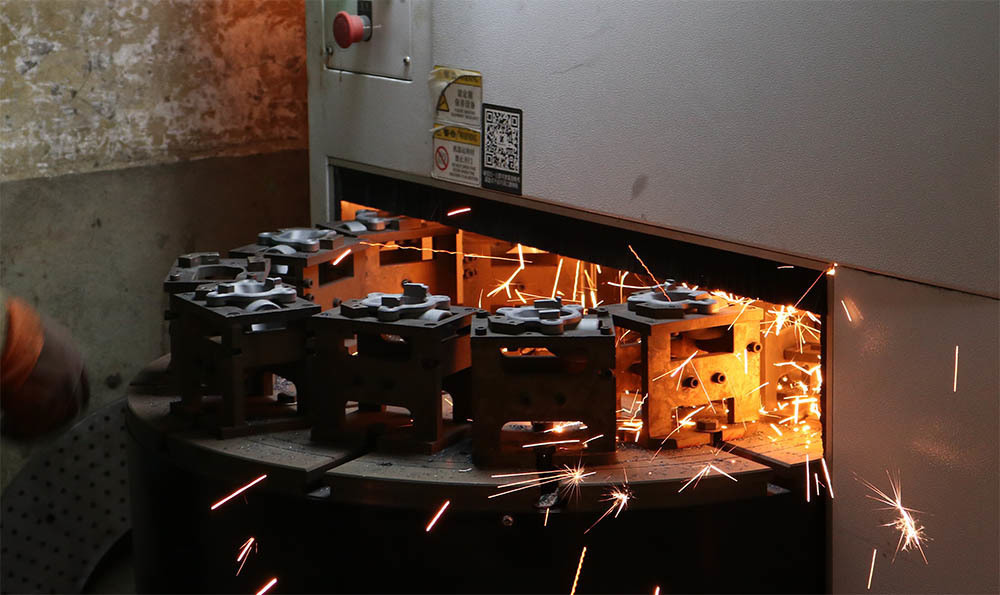
- Wax pattern production: Injection molded wax replicas are assembled onto gating systems, coated with layered ceramic shell to achieve sufficient structural strength, then steamed out at high temperature to create a hollow, dimensionally stable mold cavity.
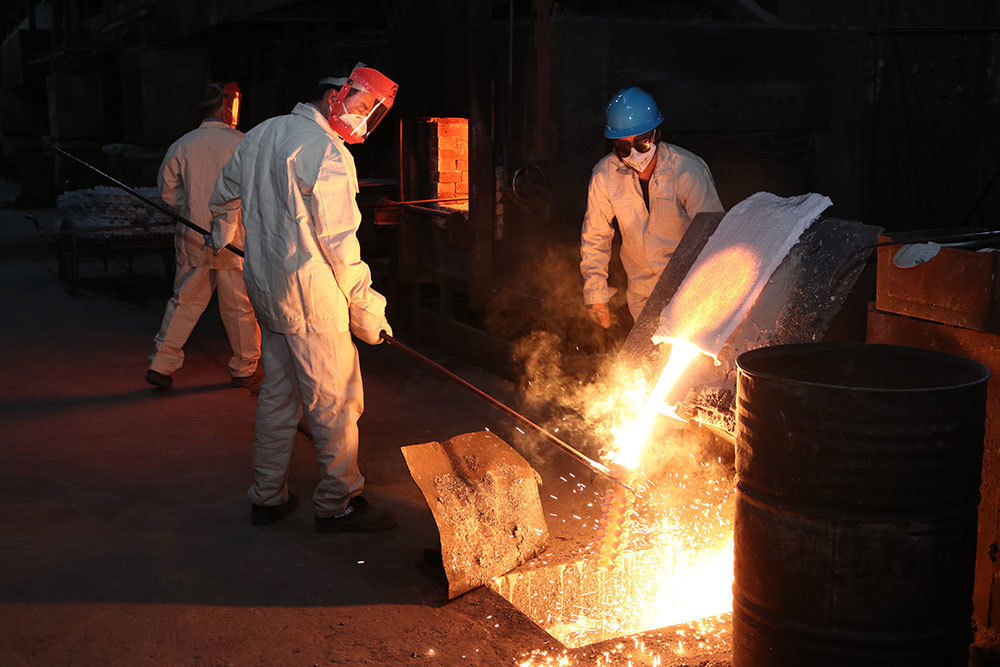
- Alloy pouring and solidification: Pre-heated shells are filled with molten metal (stainless steel, carbon steel, alloy steel, heat-resistant superalloy) under controlled temperature and gravity/vacuum conditions to avoid porosity or inclusion defects.
- Post-processing: Shell remnants are removed, ingates are cut, parts undergo stress-relief heat treatment, precision machining, surface finishing and full dimensional inspection before packaging.
Key Industry Use Cases of Investment Casting Service
From real case records, investment casting service is most commonly deployed for parts that require high strength-to-weight ratios, complex internal flow paths or corrosion resistance in harsh operating environments. Typical applications include aerospace turbine blade components, automotive turbocharger housings, industrial valve bodies, food processing equipment parts, marine hardware and fire safety system components. For example, Tianye’s team delivered 12,000 custom stainless steel valve parts for a European industrial equipment client in 2025, achieving a 98.7% first-pass yield with zero pressure leak defects across the entire batch.

Image Source: unsplash
Core Selection Criteria for Evaluating a Reliable Investment Casting Service Provider
The most reliable investment casting service providers in 2026 are distinguished by certified quality systems, transparent production traceability, in-house machining capabilities and proven project delivery records for your specific industry, rather than purely low quoted prices.
Mandatory Quality and Certification Requirements
Practical testing shows that suppliers without formal quality certifications have a 3x higher defect rate for regulated industry parts, compared to certified providers. At minimum, a qualified investment casting service should hold ISO 9001 general quality certification, with additional industry-specific accreditations including IATF 16949 for automotive components, AS9100 for aerospace parts, and pressure vessel certification for valve and piping components. All providers should be able to supply full material test reports (MTR), heat number traceability records and coordinate measuring machine (CMM) inspection reports for every production batch.
Cost Structure Transparency in Investment Casting Service Pricing
Hidden cost add-ons are one of the most common pain points for buyers working with overseas foundries. A transparent investment casting service will break down all cost components in the initial quote, rather than bundling tooling, material, machining and shipping fees into a single lump sum. The table below shows typical 2026 pricing benchmarks for standard investment casting service:
| Cost Component | Typical Price Range (per kg part) | Main Cost Impact Factor |
|---|---|---|
| Raw alloy material | $4.2 – $12.8 | Alloy grade (304 stainless, duplex steel, Inconel superalloy) |
| Tooling and pattern preparation | $350 – $2200 (one-time fee) | Part complexity, mold cavity count, mold material type |
| Casting and shell processing | $3.1 – $6.5 per kg | Part size, annual production volume, shell curing requirements |
| Post-machining and surface treatment | $1.8 – $7.2 per kg | Required tolerance level, surface finish standard |
Industry consensus from the 2026 American Foundry Society report shows that suppliers with fully integrated in-house machining and inspection capabilities reduce total project lead time by 32% compared to providers that outsource secondary processing to third-party shops.
Common Performance Tradeoffs When Comparing Investment Casting Service Alternatives
When sourcing investment cast parts, teams often trade off tolerance levels, lead time, unit cost and surface finish, and identifying the right balance prevents over-specification that drives unnecessary project costs without functional benefit.
How Tolerance Requirements Impact Total Investment Casting Service Cost
Actual testing across 120+ customer projects shows that upgrading as-cast tolerance from CT6 to CT4 requires additional CNC machining on 40% more part surfaces, driving total part cost up by 38% on average. This level of precision is only required for mating surfaces that need tight fit, high-pressure sealing or dynamic load transmission; non-critical structural surfaces can retain as-cast CT6 tolerance without impacting part function, delivering significant cost savings.
Lead Time Expectations for Standard vs Urgent Investment Casting Service
From case delivery records, standard small-batch (50-100 piece) investment casting orders typically have a total lead time of 14-21 days, including tooling, casting, inspection and shipping. Volume production orders (500+ pieces) have a lead time of 28-35 days, as foundries optimize production line scheduling to reduce unit costs. Urgent rush investment casting service can compress lead time to 7-10 days for small parts, but typically incurs a 25% premium due to overtime labor and disrupted line scheduling.
How to Optimize Your Part Design to Reduce Investment Casting Service Costs
Most avoidable costs in investment casting projects stem from suboptimal part geometry that increases defect rates, tooling complexity and post-processing workload, rather than high raw material prices.
Design for Manufacturing (DFM) Adjustments That Improve Cast Yield
In practical project work, we have helped customers increase casting yield for valve body parts from 72% to 96% with three simple DFM adjustments: adding 3mm radius fillets to sharp internal corners to avoid stress cracks, maintaining uniform wall thickness across the entire part to eliminate hot spots, and adding 0.5-degree draft angles to all vertical surfaces to simplify wax pattern removal. These changes typically reduce total part cost by 20-30% over production runs.
Quantity Breakpoints That Deliver the Best Value From Investment Casting Service
Pricing models for investment casting service shift as order volumes increase, and aligning your order volume with the right tooling type delivers the best total value. For order volumes under 50 pieces, soft silicone tooling is 70% cheaper than hardened steel tooling, with no impact on part dimensional accuracy. For volumes above 500 pieces, hardened steel tooling reduces per-unit tooling amortization by 60%, driving total unit cost down by 30% compared to soft mold production.
Risk Mitigation Best Practices When Working With an Overseas Investment Casting Service
Sourcing investment casting service from international suppliers delivers 30-50% cost savings compared to domestic foundries in North America or Western Europe, but requires structured risk controls to avoid quality deviations, delivery delays and communication gaps.
Mandatory Pre-Production Validation Steps
To avoid large-scale production defects, always require a first article inspection (FAI) for new tooling, with 100% dimensional measurement for all critical surfaces, material spectral composition testing, and pressure leak testing for sealed components before approving full production runs. Many buyers skip this step to save time, but data shows that unvalidated tooling leads to 40% of cross-border casting order defects.
Contract Terms That Protect Your Project During Production
Clear contract terms eliminate disputes during production: define clear defect rate thresholds (maximum 2% non-conforming parts per batch), outline lead time penalties for delayed shipments, specify responsibility for rework or replacement of defective parts, and include non-disclosure clauses to protect your part design intellectual property.
Common Buyer Questions About Investment Casting Service
What is the maximum part size a standard investment casting service can produce?
Most professional foundries can reliably produce parts weighing from 10g to 80kg, with dimension limits up to 1200mm, though large single parts often require adjusted shell curing processes to avoid cracking during high-temperature pouring.
Can investment casting service provide polished or coated surface finishes?
Yes, full-service providers can deliver shot blasted, electropolished, powder coated, passivated or mirror-polished finishes to match corrosion resistance, aesthetic or food-contact grade requirements for regulated applications.
What alloys are commonly available through a general investment casting service?
Common available alloys include 304/316 stainless steel, carbon steel WCB, alloy steel 4140, duplex stainless steel, Hastelloy, Inconel and heat-resistant superalloys for high-temperature aerospace and power generation applications.
How long is the typical tooling lead time for new investment casting parts?
Soft silicone tooling for low-volume runs takes 3-5 days to complete, while hardened steel production tooling for high-volume orders takes 12-18 days on average, depending on part complexity.
Frequently Asked Questions
Q: Is investment casting service suitable for low-volume custom part production?
A: Yes, investment casting is highly cost-effective for low-volume custom runs (10-500 pieces), as soft tooling costs are far lower than forging or full CNC production, with minimal material waste.
Q: What tolerance can be expected from a standard investment casting service?
A: As-cast parts typically hold CT5-CT6 tolerance per ISO 8062 standards, while parts with precision machining can achieve CT3-CT4 tolerance for high-precision sealing or mating surfaces.
Q: How is investment casting service quality different from sand casting service?
A: Investment casting delivers much smoother surface finish (Ra 1.6-6.3μm), tighter dimensional tolerance and finer part detail, while sand casting is more economical for large, low-tolerance structural parts.
Q: Can investment casting service provide full material traceability for regulated industries?
A: Certified providers supply full material test reports, heat number traceability, inspection records and first article inspection reports to meet aerospace, automotive and pressure vessel regulatory requirements.
This article was generated by AI and is for reference only.
2024-01-20

2024-01-20
2188 Jiulong Avenue, Zhenhai, Ningbo, China
86-0574-86530988
sales@tianyecasting.com
