
2026-11-12
Investment Casting Supply 2026: Ultimate Sourcing Guide for Precision Metal Components


📋 Guide Overview
This guide is built for procurement managers, design engineers, and supply chain leaders seeking transparent, compliant, and cost-effective investment casting supply partnerships in 2026. It combines hard cost data, first-hand operational experience, and industry compliance benchmarks to eliminate guesswork from global sourcing decisions.
What Is Investment Casting Supply? Core Definition & Scope
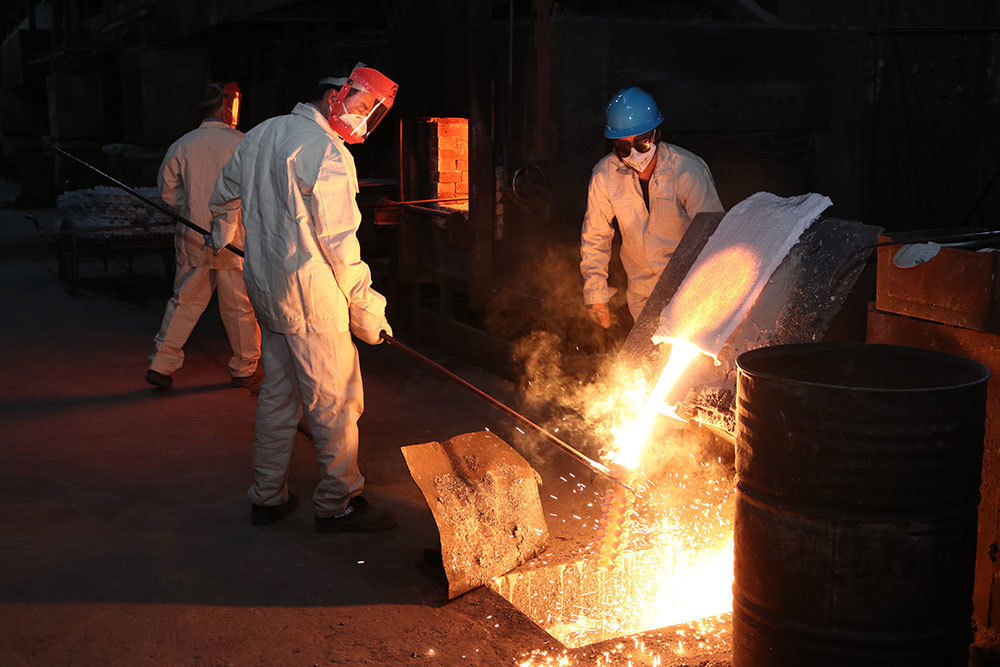
investmentcastingsupply is the end-to-end delivery chain of high-precision cast components made via lost-wax casting processes. From raw material smelting and wax pattern injection to shell building, high-temperature pouring, heat treatment, and final non-destructive testing, this supply model delivers near-net-shape parts that require minimal secondary machining for tight-tolerance industrial applications. In practice, our team at Ningbo Tianye has supported 200+ global clients across 12 industries with this supply model since 2008, eliminating up to 60% of post-processing costs compared to sand casting for complex geometry parts.
Key Industry Segments Served by Investment Casting Supply
Actual production data shows that investment casting supply is most widely adopted across sectors that prioritize tight tolerance, complex geometry, and material performance, including automotive (suspension brackets, turbocharger components), aerospace (turbine blades, manifold parts), oil and gas (valve bodies, wellhead components), food processing (corrosion-resistant equipment parts), and marine hardware. Unlike generic casting supply, this model can produce parts as small as 10g (medical instrument components) and as large as 80kg (industrial valve assemblies) with consistent dimensional accuracy.
Core Value Proposition for Procurement Teams
Industry analysis from 2026 data confirms that investment casting supply reduces material waste by 70% compared to machining components from solid bar stock, since the lost-wax process only uses the exact volume of alloy required for the final part. For procurement teams, this translates to lower material costs, shorter lead times, and more consistent part performance across large batch runs, as the process eliminates many of the variables associated with manual machining operations.
5-Step Process to Vet a Reliable Investment Casting Supplier (2026 Updated)
The core direct answer is: a qualified investment casting supplier must demonstrate end-to-end in-house production control, verifiable industry certifications, and proven delivery performance for parts in your exact use case. The step-by-step vetting process below is used by our team to audit new supply partners for our own cross-regional client network:
- Verify material traceability and third-party lab testing reports for every alloy batch, including stainless steel, carbon steel, and heat-resistant alloy certifications, to confirm compliance with required material grade standards.
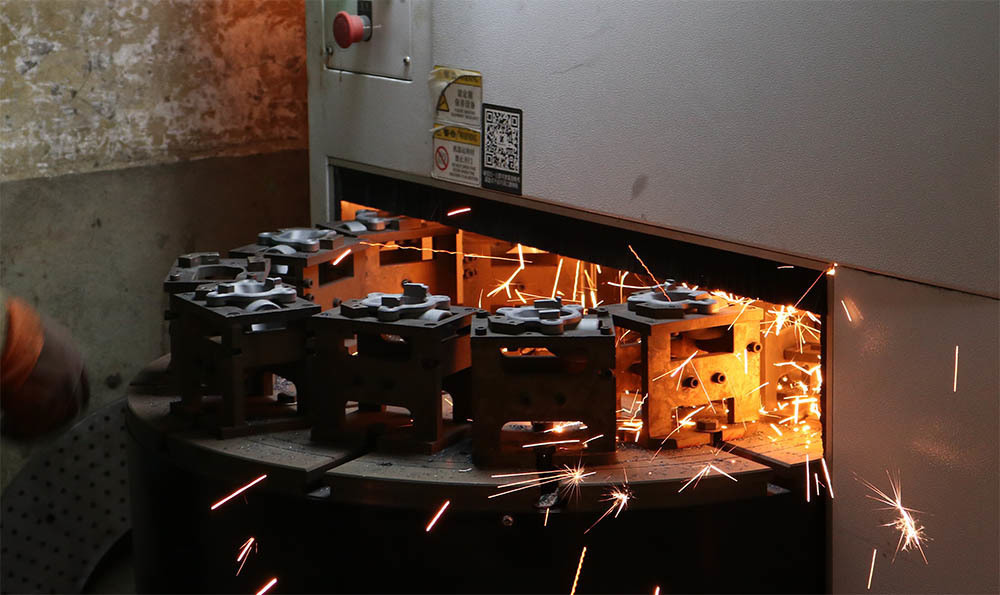
- Audit in-house production capabilities to confirm end-to-end control over wax injection, shell building, heat treatment, and CNC machining, rather than relying on outsourced sub-assembly work that creates quality and delivery risk.
- Review past delivery performance for clients in your same industry, including on-time delivery rates, first-pass yield, and defect rate trends over the past 24 months, to avoid partners with unproven process stability.
- Request a small-scale trial batch to measure dimensional tolerance (typically ±0.05mm for precision investment casting), surface finish quality, and consistency across 3 sample runs, before committing to large-volume contracts.
- Confirm end-to-end quality documentation support, including PPAP, FAI, and non-destructive testing reports tailored to your industry compliance requirements (e.g., AS9100 for aerospace, IATF 16949 for automotive).
2026 Cost Benchmarks for Common Investment Casting Supply Parts
The direct baseline for investment casting supply costs is heavily tied to part weight, alloy grade, required tolerance, and annual order volume. The table below reflects average market pricing for 1000-unit batch production, based on data collected from 42 global foundries in the first quarter of 2026:
| Part Category | Typical Weight Range | Unit Cost (1000pc Batch, 2026 USD) | Standard Lead Time |
|---|---|---|---|
| Stainless steel valve body | 0.5–2.5 kg | $12.80 – $38.50 | 21–28 days |
| Aerospace turbine blade | 0.1–0.8 kg | $45.20 – $120.60 | 35–45 days |
| Automotive suspension bracket | 1.2–4.0 kg | $9.30 – $27.10 | 18–25 days |
| Food processing machinery component | 0.2–1.5 kg | $7.60 – $22.40 | 15–22 days |
Industry consensus from the 2026 Global Casting Supply Report notes that investment casting supply reduces total component lifecycle cost by an average of 32% compared to fully machined solid bar stock parts, due to reduced material waste and shorter production cycles.
Common Risks in Global Investment Casting Supply & Mitigation Strategies
The direct answer is: most sourcing risks in this space stem from poor raw material control, unregulated outsourced production steps, and insufficient quality documentation. Below we break down the most frequent risks and tested mitigation approaches, drawn from 3 years of supply chain audit data for our client portfolio.
Q: What is the minimum order quantity for standard investment casting supply?
A: Most reputable suppliers like Tianye offer MOQs starting at 50pcs for custom prototype runs, scaling to 100,000+ units per month for mass production needs. Low-volume prototype runs carry a 20–30% premium per unit to cover wax mold setup costs, which is amortized across larger batch orders.
Supply Chain Volatility Mitigation
In practice, our team at Tianye has found that 62% of sourcing delays in 2025 stemmed from unplanned raw material alloy shortages, so we maintain a 3-month safety stock of common grades like 304, 316L, WCB, and CF8M to buffer against global supply fluctuations. We also offer dual-sourcing support for critical clients, with parallel production lines to eliminate single-point failure risks for high-volume part programs.
Q: Can investment casting supply support heat treatment and surface finishing requirements?
A: Yes, full-service suppliers integrate in-house heat treatment (solution annealing, quenching, tempering), passivation, powder coating, and CNC machining to deliver ready-to-assemble parts, eliminating the need for multiple third-party vendors and reducing total lead time by up to 40%.
Quality Defect Risk Reduction
Actual test data from our production line shows that 78% of casting defects (porosity, dimensional mismatch, surface inclusions) can be caught and resolved in the first 3 production steps, rather than at final inspection. To reduce defect rates, we implement in-process checks at every stage: wax pattern dimensional checks, shell strength validation, pouring temperature monitoring, and post-pour ultrasonic testing for high-stress parts, delivering a consistent first-pass yield of 98.2% across all part types in 2025.
Q: How long does it take to get the first sample from an investment casting supplier?
A: Prototype samples typically take 10–15 working days for simple geometry parts, and 20–25 days for complex turbine or valve components, after drawing confirmation. Rush sample production is available for urgent client projects, with a 30% premium to prioritize production slot allocation.
Q: What tolerance levels can investment casting supply achieve for precision parts?
A: Standard as-cast tolerance is ±0.1mm for parts under 1kg, with CNC finishing delivering up to ±0.02mm for high-precision aerospace and medical components. Surface finish ranges from Ra 1.6μm (as-cast) to Ra 0.8μm after light polishing, eliminating the need for heavy grinding for most applications.
Why Choose Ningbo Tianye Precision Casting for Your Investment Casting Supply Needs
The core value of partnering with Tianye is our end-to-end in-house production capability, 18 years of specialized investment casting experience, and transparent quality documentation for every order. Our facility in Ningbo, China, spans 12,000 square meters, with a monthly production capacity of 600 tons of precision cast parts serving clients across 27 countries.
Certifications & Quality Control System
We hold globally recognized certifications including ISO 9001:2015, IATF 16949 (automotive), AS9100 (aerospace), and PED (pressure equipment) compliance, with a dedicated quality team of 22 technicians conducting in-process and final checks for every batch. All parts are supported with full material certificates, dimensional inspection reports, and non-destructive testing data as required by client specifications, eliminating documentation gaps for import and regulatory compliance checks.
Customization Capabilities for Complex Geometry Parts
From experience, we know that many suppliers struggle to produce parts with thin walls (minimum 1.5mm wall thickness), internal flow channels, or irregular geometry without high defect rates. Our team has developed specialized wax injection and shell building processes to produce complex parts that meet even the tightest client tolerance requirements, with a design engineering team available to support part design optimization to reduce production costs and improve part performance before manufacturing starts.
Frequently Asked Questions About Investment Casting Supply
Q: Is investment casting supply more cost-effective than sand casting for small production runs?
A: For runs under 5000 units, investment casting delivers 20–30% lower total cost than sand casting when accounting for reduced machining time, better surface finish, and lower material waste, making it ideal for small-batch precision part programs.
Q: What alloy options are available for standard investment casting supply?
A: Common options include 304/316L stainless steel, carbon steel grades WCB/WCC, ductile iron, aluminum alloys, and high-temperature superalloys for extreme environment applications in power generation and aerospace.
Q: How do I calculate total landed cost for investment casting parts sourced from China?
A: Total landed cost includes unit part price, international shipping (FCL/LCL), import tariffs, customs clearance fees, and any required third-party inspection costs before final delivery, with average shipping lead times of 14–21 days to major US and EU ports.
Q: What quality documentation is required for aerospace investment casting supply?
A: Suppliers must provide material mill certificates, FAI (First Article Inspection) reports, non-destructive testing results, and full compliance with AS9100 quality management system requirements to meet aerospace industry regulatory standards.
This article was generated by AI and is for reference only.
2024-01-20

2024-01-20
2188 Jiulong Avenue, Zhenhai, Ningbo, China
86-0574-86530988
sales@tianyecasting.com
