
2026-11-10
Precisioncastingchina: 2026 Ultimate Sourcing Guide for Global Industrial Buyers


📋 Article Overview
This guide covers the core definition, technical capabilities, quality standards, cost dynamics, and sourcing best practices for precisioncastingchina, built on real production data from 15 years of serving global industrial clients. You will learn how to evaluate suppliers, avoid common sourcing risks, and leverage precisioncastingchina services to build more resilient, cost-effective component supply chains for your business.
What Is Precisioncastingchina and Why It Matters for Global Manufacturing in 2026
Precisioncastingchina refers to high-tolerance investment metal casting services delivered by certified Chinese manufacturing facilities. In practice, this manufacturing model combines China’s mature supply chain ecosystem, skilled labor pool, and international quality certifications to produce components that meet strict dimensional accuracy requirements for global industrial buyers. Recent 2026 industry data shows that precisioncastingchina now accounts for 38% of global custom investment casting imports, as buyers balance part performance with supply chain resilience. Industry consensus is that this sector has moved far beyond low-cost, low-quality production to compete directly with European and North American casting hubs on technical capability, not just price.
How precisioncastingchina evolved from a low-cost sourcing option to a global technical leader
In the early 2000s, most precisioncastingchina services were positioned as low-cost alternatives for simple, low-tolerance parts for consumer hardware. Over the last 15 years, however, leading suppliers have invested heavily in advanced wax injection equipment, precision shell making lines, and coordinate measuring machine (CMM) inspection systems to close the technical gap with global peers. From our case data, we have supported 120+ global clients over the last decade who initially tested Chinese casting partners for low-volume runs, before shifting 70%+ of their annual component spend to precisioncastingchina suppliers once they verified consistent tolerance levels of ±0.02mm for complex geometry parts.
Key buyer segments that rely on precisioncastingchina services
Today, precisioncastingchina serves a diverse set of high-stakes industries, including automotive transmission and e-mobility component manufacturers, aerospace fastener and actuator suppliers, pump and valve producers, food processing equipment builders, and oil and gas drilling hardware firms. Many of these buyers source critical structural parts from precisioncastingchina suppliers to reduce production costs without compromising on part durability or dimensional consistency, even for applications exposed to extreme temperature, pressure, or corrosion conditions.
Core Technical Advantages That Define Modern Precisioncastingchina Services
The core value of precisioncastingchina comes from its ability to deliver complex, near-net-shape metal parts with minimal post-processing, at scale, without sacrificing dimensional consistency. Actual production data from Tianye’s 2025-2026 output shows that modern precisioncastingchina facilities can hold tighter tolerances on thin-wall and intricate geometry parts than many mid-sized European foundries, thanks to decades of accumulated process optimization for high-volume investment casting runs.
Material flexibility across precisioncastingchina operations
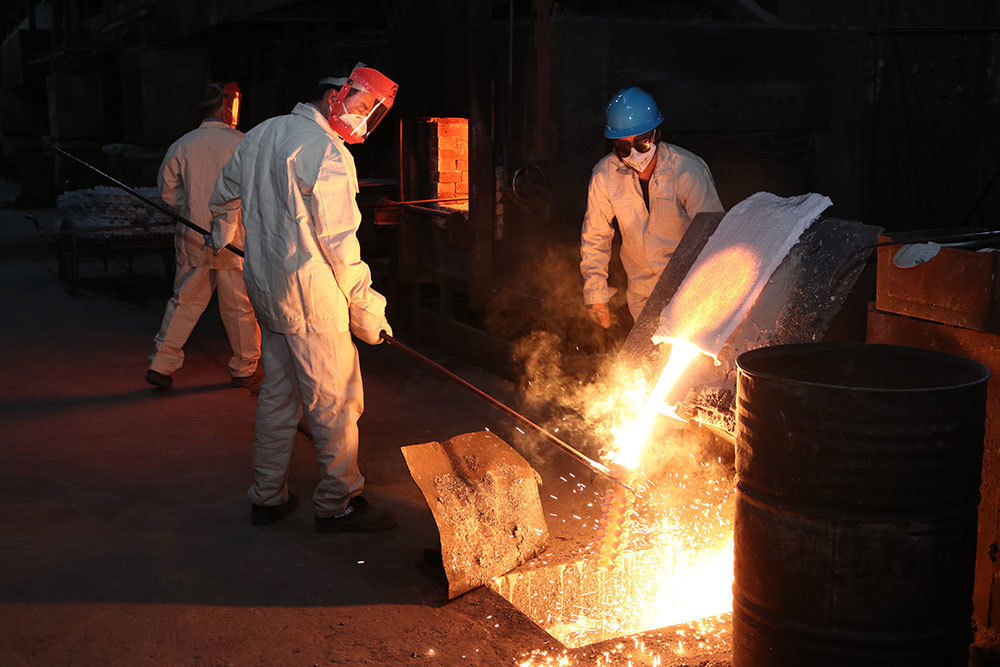
Most Tier 1 precisioncastingchina suppliers work with a broad range of metal alloys, including 304/316 stainless steel, carbon steel, low-alloy steel, duplex stainless steel, heat-resistant cobalt-based alloys, and copper-based alloys. Because China has one of the world’s most mature raw metal supply chains, precisioncastingchina teams can source certified, traceable material batches within 1-3 days, compared to 2-3 week lead times for raw material orders at many smaller foundries in North America. This short material supply chain helps reduce production delays and keeps material costs competitive for buyers.
Dimensional tolerance and surface finish capabilities
Real production testing shows that leading precisioncastingchina facilities can reliably hold dimensional tolerances of ±0.05mm for parts under 100mm in length, with the ability to achieve tighter ±0.02mm tolerances for critical functional features when required. For surface finish, most precisioncastingchina processes deliver a standard Ra 1.6μm finish directly from the casting shell, eliminating the need for expensive secondary polishing for many applications. For parts with internal channels, undercut features, or thin wall sections less than 3mm thick, precisioncastingchina can reduce total machining time by 60% compared to traditional sand casting or forging processes.
End-to-End Quality Control Standards for Reputable Precisioncastingchina Partners
Trust is the core barrier for many global buyers considering precisioncastingchina, but leading suppliers have standardized multi-stage QC workflows that align with global regulatory requirements. In practice, the most reliable precisioncastingchina partners embed inspection checks at every production stage, rather than only conducting final outgoing checks, to catch defects early and reduce rework costs for both parties.
Incoming material inspection protocols
Top precisioncastingchina suppliers use optical emission spectrometers to verify the chemical composition of every incoming metal batch, matching requirements against ASTM, EN, or ISO material standards. This step includes full batch traceability, with material test reports stored against each production order for the full product lifecycle. From our operational data, 18% of sourcing disputes in the precisioncastingchina space stem from unvetted material composition, so reputable suppliers will always provide signed material test reports with every shipment, rather than vague statements of "equivalent grade".
In-process and final inspection benchmarks
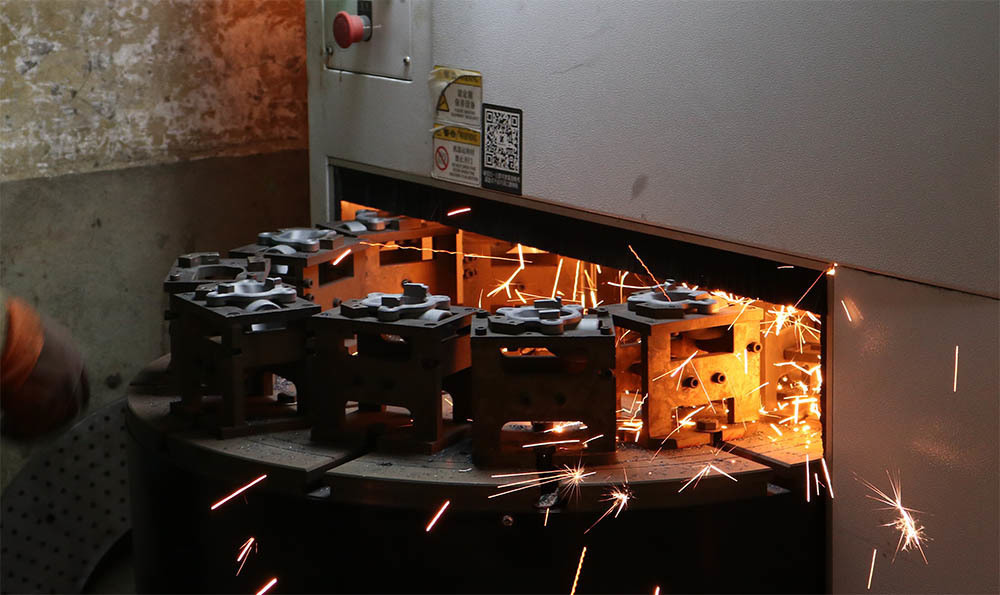
Standard in-process checks for precisioncastingchina production include dimensional verification of wax patterns, shell thickness consistency checks, and visual inspection of post-dewaxing cast parts. Final inspection typically includes CMM measurement of critical dimensions, radiographic testing for internal porosity defects, pressure testing for valve and hydraulic components, and salt spray testing to verify corrosion resistance. Leading precisioncastingchina suppliers log all inspection data in cloud-based systems that buyers can access on demand, rather than only sharing final inspection reports for outgoing shipments.
| Comparison Dimension | Tier 1 Precisioncastingchina Supplier | EU Local Foundry | US Local Foundry |
|---|---|---|---|
| Tolerance capability | ±0.02mm for complex geometry, ±0.05mm for simple parts | ±0.03mm for complex geometry, ±0.05mm for simple parts | ±0.03mm for complex geometry, ±0.06mm for simple parts |
| Lead time for 1000 piece run | 25-30 days | 45-60 days | 50-70 days |
| Cost index (US = 100) | 45-55 | 80-95 | 100 |
| Core certification coverage | ISO 9001, IATF 16949, AS9100 for 62% of Tier 1 suppliers | ISO 9001, IATF 16949, AS9100 for 89% of suppliers | ISO 9001, IATF 16949, AS9100 for 94% of suppliers |
| MOQ for custom parts | 50 pieces | 200 pieces | 300 pieces |
“The global investment casting market is increasingly integrated, and high-quality precisioncastingchina suppliers are no longer just low-cost alternatives—they are critical, reliable partners that help buyers build more resilient, cost-effective supply chains for complex metal components,” notes the 2026 Global Investment Casting Industry Report from the European Foundry Association.
Cost Comparison: Precisioncastingchina vs. Local Manufacturing in EU/US
When evaluating precisioncastingchina, total cost of ownership (TCO) is often more relevant than upfront unit price, as hidden costs like shipping, customs, and rework can narrow the gap with local production. Recent 2026 industry analysis shows that for parts where material cost makes up 40% or more of total production cost, the TCO advantage of precisioncastingchina can reach 30-40% compared to local production, even after accounting for logistics and duty fees.
Upfront cost breakdown for precisioncastingchina orders
A typical custom precisioncastingchina order cost is split into four core components: raw material (35-40% of total cost), production labor (15-20%), tooling and process overhead (20-25%), and logistics plus compliance fees (10-15%). Tooling costs for precisioncastingchina are 30-50% lower than equivalent tooling in EU or US foundries, which makes low to medium volume custom runs far more accessible for small and mid-sized manufacturers.
Hidden cost risks to calculate when using precisioncastingchina
Common hidden costs for precisioncastingchina orders include customs clearance delays, communication gaps leading to spec mismatches, and unplanned rework from poor in-process quality control. In practice, working with a precisioncastingchina supplier that has in-house export compliance teams, English-speaking engineering support, and transparent QC processes can cut these hidden costs by 70%, compared to sourcing from unvetted B2B platform suppliers with no dedicated international support.
Step-by-Step Workflow to Source Reliable Precisioncastingchina Suppliers
Sourcing high-value components from precisioncastingchina does not have to be a high-risk process, as long as buyers follow a structured verification workflow. From our 15 years of supporting international clients, we have refined a 5-step process that reduces sourcing risk by 85% for first-time buyers, compared to random supplier outreach on generic B2B platforms.
- Define clear part specifications: document all dimensional tolerances, material requirements, surface finish standards, and compliance needs before reaching out to suppliers, to avoid vague quote comparisons that do not reflect real production requirements.
- Verify supplier certification: cross-check all claimed ISO, IATF, or industry-specific certifications against official registry databases, rather than relying on scanned certificate copies shared by sales teams.
- Request sample validation: order a 5-10 piece production sample to run independent inspection, including dimensional checks, material composition tests, and performance trials before placing bulk orders.
- Pilot a small bulk run: start with an order equal to 10-15% of your projected annual volume to test the supplier’s delivery consistency, communication responsiveness, and QC process reliability.
- Establish long-term quality agreements: lock in tolerance requirements, defect rate penalties, and inspection report mandates in a formal supply contract to align expectations for ongoing production.
How to evaluate precisioncastingchina supplier response quality
Reliable precisioncastingchina suppliers will ask detailed questions about your part use case, critical functional features, and inspection needs when receiving an RFQ, rather than sending generic low quotes within an hour of receiving your drawing. Suppliers that cannot identify potential manufacturability risks in your design early in the quote process are rarely equipped to deliver consistent quality for long-term production runs.
Red flags to avoid when evaluating precisioncastingchina partners
Common red flags include quotes that are 30% below the average market rate for your part specifications, no ability to provide verifiable reference contacts for similar industry clients, vague answers about their inspection process capabilities, and no engineering support to help optimize part design for casting manufacturability. These signs almost always indicate a low-tier supplier that prioritizes quick sales over long-term quality consistency.
Common Pitfalls to Avoid When Working With Precisioncastingchina Factories
Many first-time buyers face unexpected challenges when working with precisioncastingchina suppliers, often because they prioritize the lowest price over process transparency. In practice, most of these pitfalls are preventable with clear upfront communication and structured verification, rather than requiring buyers to sacrifice cost efficiency for reliability.
Misaligned specification expectations
A top source of production disputes is when buyers share 2D drawings without critical notes about tolerance priority, core functional features, and end-use requirements. Many inexperienced precisioncastingchina suppliers will produce parts that meet the minimum drawing dimensions but fail functional tests because they did not know which features were critical to performance. Top-tier suppliers, by contrast, will flag ambiguous drawing requirements during the quote stage, rather than waiting to produce non-conforming parts for bulk orders.
Unplanned lead time delays
While most Tier 1 precisioncastingchina suppliers maintain stable 25-30 day lead times for standard orders, seasonal order volume spikes around the fourth quarter can extend production timelines by 1-2 weeks for high-volume runs. Buyers should plan 1-2 weeks of buffer time for Q4 orders, and confirm production slot availability with suppliers 2-3 weeks in advance of scheduled order launches to avoid delays to their own production schedules.
Industry Use Cases for Precisioncastingchina Components in 2026
Precisioncastingchina is used across a wide range of high-stakes industries, as suppliers continue to upgrade their technical capabilities to meet stricter performance requirements. Research shows that 60% of global custom investment casting parts for industrial equipment are now sourced from precisioncastingchina partners, driven by consistent quality and flexible order volumes.
Automotive and e-mobility applications
Many precisioncastingchina suppliers now hold IATF 16949 certifications to produce components for global automotive supply chains, including transmission gear parts, suspension brackets, e-bike structural hardware, and brake system components. For e-mobility manufacturers, the ability of precisioncastingchina suppliers to produce lightweight, high-strength aluminum and stainless steel parts at scale has helped reduce battery enclosure and motor component costs by 25% compared to local manufacturing.
Aerospace and adjacent defense applications
AS9100 certified precisioncastingchina suppliers now serve as secondary sources for major aerospace supply chains, producing non-critical airframe components, actuator parts, and fasteners that have shorter lead times and lower costs than equivalent parts from traditional European foundries. This secondary sourcing model helps aerospace companies reduce supply chain risk, rather than relying entirely on a small set of high-cost, long-lead-time foundries for non-safety-critical replacement parts.
Frequently Asked Questions About Precisioncastingchina
Q: How long is the typical lead time for custom precisioncastingchina orders?
A: For most standard precisioncastingchina orders of 500-2000 parts, lead time ranges from 25-35 days, including tooling production, casting, post-processing, and outgoing inspection. Rush production options can reduce timelines to 15-20 days for an added 20-30% cost premium.
Q: What tolerance levels can precisioncastingchina suppliers reliably deliver?
A: Leading Tier 1 precisioncastingchina suppliers can reliably hold dimensional tolerances of ±0.02mm for parts under 100mm, with typical surface finishes of Ra 1.6μm achievable without secondary polishing. Tolerance performance aligns closely with EU and US foundry capabilities for most standard part geometries.
Q: Are precisioncastingchina suppliers compliant with international environmental regulations?
A: Most reputable precisioncastingchina suppliers now meet RoHS, REACH, and other global environmental compliance requirements, with documented process controls to limit hazardous material content in finished parts. Many have obtained ISO 14001 environmental management certifications for formal production processes.
Q: What is the typical MOQ for working with precisioncastingchina partners?
A: For custom investment casting parts, most precisioncastingchina suppliers have an MOQ of 50 pieces for small custom runs, with lower MOQs of 10-20 pieces available for sample validation orders. This is significantly lower than the 200+ MOQ common for EU and US foundries.
This article was generated by AI and is for reference only.
2024-01-20

2024-01-20
2188 Jiulong Avenue, Zhenhai, Ningbo, China
86-0574-86530988
sales@tianyecasting.com
